CASE STUDY
Marketing the Eco-Shack
BY GREGORY J BRUSH, ASSISTANT PROFESSOR IN MARKETING, UNIVERSITY OF WESTERN AUSTRALIA, AND DOUGLAS THOMPSON, ARCHITECTURAL DESIGNER WITH THE PERMIT SHOP (NZ) LIMITED
Background
New Zealanders have a love aair with their houses. Saving a deposit for your Ârst home is a common life priority. The mortgage payments and running expenses that follow consume a signiÂcant amount of household resources. However, as families evolve and grow, their living requirements also change. For example, a spare room might be needed to accommodate a study or home business, or an older child or elderly parent that has returned to the family home. With a favourable national tax system for home ownership, many New Zealanders acquire additional rental properties. These are often seen as an eective retirement fund and a physical symbol of wealth and comfort. Additionally, with our love of the outdoors and a mainstay of New Zealand culture being the summer vacation to the beach, mountain, lakes or rivers, we invariably require accommodation in these often very remote areas.
Introduction
In an age of increasing climate change, there is a need to consider the sustainability and environmental impacts of our housing and accommodation choices. The greening of the built environment is a result of greater public awareness, information and understanding of how the buildings we live, work and play in aect the natural environment, our bank balances and our health. But what do we really mean when we say a product is ‘green’? It is a broad term that people are instantly drawn to but can only vaguely deÂne. It is often linked to other words such as ‘sustainable’, ‘environmental’, ‘carbon footprint’, ‘ecological’, ‘carbon neutral’, ‘biodegradable’, ‘energy ecient’, ‘renewable’, ‘organic’, ‘recyclable’, ‘alternative energy’, ‘non-toxic’, or ‘eco-’ anything. Supermarket shelves are Âlled with ‘green’ or ‘eco’ products, and we may not mind paying a little more for the eco-toilet paper to ease our environmental guilt about all the plastic packaging in the rest of our shopping. The purchase of ‘eco’ supermarket products can be a relatively simple choice, as the additional cash outlay is generally not large. But how green and deep are our pockets when it comes to the built environment?
Changes to New Zealand building regulations have identiÂed that a lot of existing homes, generally those built prior to 2000, are under-insulated. This often leads to cold, damp environments and health problems. New building developments now have an increased insulation-rating requirement. There are also subsidies for insulating existing buildings built prior to 2000, including installation of solar water heating. These are accessed through the Energy, Efficiency and Conservation Authority (EECA). Through better insulation, solar hot water, low voltage bulbs and appliances we use less power.
Local authorities are encouraging further environmental efforts. Some local authorities have low water-flow fitting regulations. Also, some local authorities encourage the installation of water tanks to catch run-ofrom the roof for non-potable water use, and encourage re-use of grey water—which is laundry and shower water run-o—for watering plants. These measures reduce demand on our water supply, wastewater treatment and stormwater services.
The general movement by our regulatory authorities in terms of the built environment is to reduce, reuse and conserve—with a strong emphasis on design. These outcomes are achieved by various products that may or may not be ‘green’ in their sustainability or production. Examples include wool insulation versus polystyrene insulation, and plantation timber versus imported hardwood. There are several choices for any building element, and their selection will be based on factors such as cost, long-term return, toxicity and appearance. The ‘eco’-ness of any building is subjective, but in general we could say that it is any building where the construction, materials and ongoing costs reduce, re-use and conserve the natural environment.
The process of constructing any new building, extension or renovation—‘eco’ or not—is often a long, stressful process. The only thing that you can guarantee is that it will take longer and cost more than expected. Recent changes to the building regulations allow for a ‘sleep out’ of up to 10 square metres be placed on a section (with or without an existing house) without any council permits. This change is a key factor behind Doug and Paul’s development of the Eco-Shack.
The Eco-Shack Concept
Doug has been in the building industry for over 10 years, with mostly residential experience. He has recently completed his National Diploma in Architectural Technology (NDAT), which qualiÂes him as a draughtsman. He has also appeared on television as a builder and presenter on Mitre 10 DIY Rescue, and for two seasons as a judge on Mitre 10 Dream Home. His main focus is on creating a successful design and building company with an ‘eco-slant’. Paul is a qualiÂed welder with a small pipe-welding company that he is aiming to expand. Doug and Paul both see the potential of the Eco-Shack and have come up with two products—the standard Eco-Shack and the Urban Eco-Shack. Both owners are keen and practical, but have no marketing experience.
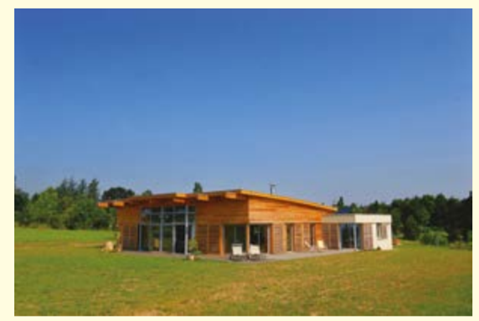
Eco-Shacks are basically transportable buildings, 2.4 to 3 metres wide, and in varying lengths from 3.6 metres upwards. The width allows Eco-Shacks to be easily transported and sited by a helicopter or a Hiab truck— the mounted crane on the back of the truck can lift up to 10 tonnes. The shacks are built to NZS3604 (New Zealand timber-framed building) standards and will last a minimum of 50 years given proper maintenance. The following are the speciÂcations of the standard 2.4 × 6 metre Eco-Shack:
â– plantation pine timber framing
â– above minimum standard wool insulation
â– eco-ply cladding
â– underoor water tank (catchment othe roof)
â– photovoltaic panels (solar power)
â– wind turbine
â– battery storage
â– composting toilet
â– battery powered water pressurised plumbing
â– Califont hot water shower
â– galvanised steel chassis
â– drop-down decks and awnings
â– double glazed joinery (for windows and doors)
â– long-run colour steel rooÂng
â– phone/data connection
â– variety of interior Ât-outs.
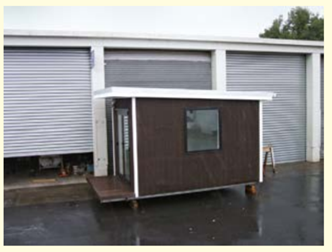
The standard Eco-Shack is built in modular form so that the speciÂcations can be easily modiÂed, depending on a client’s needs. The Eco-Shack developers believe their product would be excellent for low-impact o- the-grid living. It is easily transportable and sited and is ready to operate, given a bit of sunshine, wind and rain (or water truck, initially). The cost of a basic unit with speciÂcations as above is in the range of NZ$35,000 to $40,000. Several other Ârms, including Portable Rooms and Cabin Fever, oer similar accommodation but are not geared to o-the-grid living.
The speciÂcations for the Urban Eco-Shack are:
■3.6 × 2.4 metre oor area with 0.9 × 2.4 metre deck
â– plantation pine timber framing
â– above minimum standard wool insulation
â– eco-ply cladding
â– double glazed joinery (for windows and doors)
â– long-run colour steel rooÂng.
1. Using the common bases for segmenting markets (demographics, psychographics, behaviour, etc.), identify and describe a consumer segment in New Zealand that could be interested in the Urban Eco-Shack.
2. Identify and describe a business segment in New Zealand that could be interested in the standard Eco-Shack.
3. Are Eco-Shack customers purchasing a product or service? Discuss.
4. Discuss how you would brand and position the Eco-Shack to consumer and business segments.
5. Is the Eco-Shack classiÂed as a continuous, dynamically continuous or discontinuous innovation? Why?