
solution

CASE STUDY

ROI can send you broke

John believes that marketing should be ­nancially accountable. ‘Marketing might be an art,’ he likes to say, ‘but it is a commercial art.’ He works as a marketing director for a large consumer goods company that sells many brands throughout Asia. Several hundred people work in his marketing department and over the past ­ve years he has trained them all on the use of return on investment (ROI) to evaluate their marketing activities. Everybody knows that John expects a high ROI on each and every thing they spend money on.
Today, John has just returned from yet another disappointing meeting with the Chief Financial Of­cer. He feels under pressure because the CFO again berated him for disappointing sales revenue and pro­tability growth. John had hoped that shifting the marketing department’s emphasis onto ROI would have earned him the respect of the CFO as well as earning the company healthy pro­ts. He can’t understand what has gone wrong. Marketing department projects and expenditures are showing higher ROIs than they ever have before. But a number of the company’s brands—including the largest—are losing market share and pro­tability is declining.
It’s not uncommon for marketing professionals to be criticised by their peers, especially those in the ­nance department, for a lack of appreciation of commercial realities. It’s certainly true that some marketers get too wound up in the artistic side of marketing and neglect the need to make sales and satisfy customers. But today in modern marketing departments there is a far greater emphasis on commercial matters and on justifying marketing expenditures.
CASE STUDY ROI can send you broke John believes that marketing should be ­nancially accountable....-1

This emphasis on accountability is good. We need to prune waste, and identify good practices. We need to be able to judge our marketing interventions. To do this, many marketers today say they pay great attention to ROI. Unfortunately, many of those who say this don’t really know what ROI means. Marketing Professor Tim Ambler of London Business School, a quali­ed accountant and former managing director, writes:
ROI is not so much understood as waved about as a totem to ward off evil spirits, namely those trying to cut advertising expenditure: ‘We are using ROI to establish the budget, so leave us alone.’ Look behind these claims and you are unlikely to ­nd much substance (Ambler, 2004).
Also, many marketers don’t understand how inappropriate this metric can be as a judge of marketing investments.
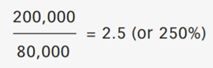
ROI is a simple equation that results in a percentage. Take the contribution to pro­ts that is returned from the marketing ‘investment’ and divide it by the cost of the investment: ROI (%) = pro­t contribution/marketing costs.
So, if we conducted a direct marketing campaign that cost $80,000 then our investment is $80,000. If that direct marketing campaign sold one million extra products on which we earn 20 cents in pro­t margin for each unit sold, we have a return of $200,000.
CASE STUDY ROI can send you broke John believes that marketing should be ­nancially accountable....-2

This looks like a fantastic return, and the ROI technique looks very useful. But there are serious problems.

The ­rst is that ROI takes attention away from the actual return, in dollars. It’s the size of the actual return that matters to shareholders. Marketing expenditure is only a part of a company’s total expenditure, and often only a small part. What matters is how effective it is, not how ef­cient it is. An ROI of $1.50 (150 per cent) on a million dollar campaign is $500,000, while an amazing $5 (500 per cent) ROI on a $10,000 campaign is still only $40,000.
Concentrating on ROI tends to encourage smaller campaigns, as these are more likely to generate higher ROI, even if dollar returns are small. It can also encourage cutting marketing expenditure—indeed, it’s possible to deliver in­nite return on advertising expenditure by slashing advertising to zero.
ROI tends to encourage campaigns that target existing customers, and heavier customers. These show higher ROI largely because many of the sales aren’t really extra sales but sales that would have happened anyway, or sales that have merely been brought forward in time. The danger is that ignoring light buyers of the brand prevents growth, and encourages erosion of market share.
It’s good to be careful with costs and for marketing activities to be evaluated in quantitative terms—but ROI is not a sensible marketing metric.

 
"Looking for a Similar Assignment? Get Expert Help at an Amazing Discount!"

solution

CASE STUDY

Procter & Gamble’s operating shift

In 2012, Procter & Gamble’s (P&G) Chief Executive, Bob McDonald, promised to deliver US$1 billion in savings by 2016, as part of a company-wide cost reduction of US$10 billion. Most of these cost savings would come from reducing marketing staff numbers. P&G’s internal surveys have shown that marketing staffed the company too bureaucratic, and so cutting layers of management may improve things.
But not all the savings will come from reducing staff. So, how much marketing expenditure will be cut?
‘Similar to R&D, we are not looking to make dramatic cuts in the support of our brands,’ said McDonald (quoted in Farey-Jones, 2012). ‘In fact, we want to increase reach, increase frequency and increase the effectiveness of our advertising impressions with consumers.’
However, McDonald did imply that some substantial reduction in marketing spend would occur, but justi­ed it by sayingef­ciency would increase:  ‘Even delivering a modest level of ef­ciency each year can amount to nearly a billion dollars of savings versus simply letting these costs grow at the same rate as sales.’ This ef­ciencygain, he said, would come largely from using new digital and social media.
To cut costs without sacri­cing impact, McDonald (quoted in Farey-Jones, 2012) said P&G is using technology to shift spending from more traditional vehicles such as television to digital and mobile advertising and more ef­ciently target consumers, ‘allowing us to build one-on-one personal relationships with every consumer’. He also expects to use more multi-brand efforts to spread spending more ef­ciently among brands. He cited the kickoff of P&G’s Summer Olympics program in January, which he said delivered more than 2.5 billion impressions in traditional and social media the ­rst month alone and produced a bigger overall impact than the brands could have had by spending individually.
AdAge reported that overall, the cost-cutting program P&G outlined was two to three times deeper than ­nancial analysts had been expecting (Neff, 2012).

CASE STUDY Procter & Gamble’s operating shift In 2012, Procter & Gamble’s (P&G) Chief Executive, Bob...

1. There is little doubt that P&G will implement its cost cuts, but will it be able to offset the reduction in marketing spend by achieving greater ef­ciency of its spend?

2. How will management and investors be able to tell if P&G has increased ef­ciency, or whether it has simply reduced the marketing support for its brands, which will eventually later show in reduced sales?

 
"Looking for a Similar Assignment? Get Expert Help at an Amazing Discount!"

solution

CASE STUDY

Loyalty ladders: Why they are unnecessary and dangerous

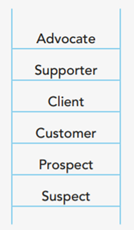
Many market research houses now market a ‘loyalty ladder’ or ‘loyalty pyramid’ product. These dissect a brand’s customer base into four to six groups, starting with something like ‘no awareness’ at the bottom and ending with something like ‘passionate loyals’ at the top. This classi­cation is usually based on behaviour (or claimed behaviour) such as share of category purchases devoted to the brand in question. Some add attitudinal statements into the customer classi­cation. Others, like the conversion model, claim to be entirely attitudinal. These differences in practice actually make little difference to the pyramid shape or scores.
The ­rst problem with these loyalty ladders is that they are a waste of money. They are basically showing the distribution of customers with different SCRs for the brand. Marketing science has known for decades that loyal behaviours and attitudes follow a

CASE STUDY Loyalty ladders: Why they are unnecessary and dangerous Many market research houses now...

set statistical distribution (Ehrenberg’s Law of Buying Frequencies), and so any brand’s true loyalty ladder can be accurately predicted simply from knowing its size compared to its rivals. If it has 100 per cent relative share, then all customers will be at the top of the ladder. So all these elaborate ladders do is reect the brand’s relative popularity (i.e. market share) and some random sampling errors, which loom large when you have four to six groups.
These ladders are attractive because intuitively marketers feel it’s their job to move people along this path, up this ladder. They also provide some entertainment value (‘that looks interesting’)—which is ­ne, because that’s all they are:  an entertaining, expensive way of presenting—and obscuring—loyalty metrics.
Unfortunately, they aren’t simply harmless entertainment showing the heterogeneity within any brand’s customer base or market (from non-buyers to high loyals). They are dangerous because they obscure the fact that the ratios of non-buyers to light buyers to medium and heavy buyers are perfectly predictable (if you apply Ehrenberg’s Law of Buying Frequencies). So, they are set. If a brand gains in market share or sales, the ratios all move in a predictable way. All loyalty ladders do is show these ratios, but they imply that you can change the ratios through particular strategies. This is wrong: they will only change if you increase or decrease market share. So loyalty ladders are misleading and unhelpful for the following reasons:

â–  They imply that managers should target particular levels of the ladder. This is wrong.

■ They imply that some brands are stronger or weaker—when really they are just reporting brand size.

â–  They are a waste of money spent on market research and reporting. Most of the tiny changes and differences they report are sampling (and other) errors.

■ They imply that awareness is a ‘one-off battle’, that once someone is aware they always notice, recognise and recall your brand—this is nonsense, and dangerous thinking.

■ They imply that 100% loyals are a brand’s most valuable customers, whereas far more volume comes from heavy category buyers who buy a number of brands.

â–  They distract marketers from the real issue, which is how to grow penetration (i.e. reach all sorts of category buyers).

 
"Looking for a Similar Assignment? Get Expert Help at an Amazing Discount!"
solution

CASE STUDY

Advertising tracking

B&T magazine once ran an interesting article, comparing how four current Australian television commercials performed on some advertisement tracking (Sinclair, 2004). One of the questions for each (recognised) commercial was whether it ‘encourages me to try/buy the brand product’. At ­rst sight, this seems a sensible question, supposedly telling the marketer if their advertising is going to generate sales. But what does it really measure? If a consumer agrees to this statement, does it mean:
â–  they think the commercial is trying to encourage people to buy (i.e. it is making an obvious sales pitch)?

■ that they ­nd the commercial personally motivating (thus making them want to buy)?

Or are they just saying they are likely to buy the brand (which probably has more to do with whether or not they currently buy this brand than whether or not the commercial motivates them)?
Or is it some sort of complex mix of the above, different for different people, and different for different campaigns?

CASE STUDY Advertising tracking B&T magazine once ran an interesting article, comparing how four...

It turns out that the three different commercials all scored similarly, with the CocaCola commercial being the odd one out. Is this simply because respondents correctly identi­ed that the commercial doesn’t make a hard sell pitch (it just shows some impressive skateboarding)? Or is it because many respondents, particularly the older ones, don’t drink cola much? Or because it really wasn’t thought to be motivational? Who knows? Does anyone believe that the Coca-Cola advertisement was the least sales effective, less than half as good as the other commercials?
The Herron brand ibuprofen (an analgesic) had a commercial that rated well, perhaps because it is a hard-sell advertisement, an ad directly comparing the Herron ibuprofen with Nurofen, the brand leader. This is an unusual situation because the two products are made of exactly the same ingredient. The Herron advertisement essentially says ‘we are the same ingredient formulation, but Australian-made and cheaper—why would you buy Nurofen?’ That’s a directly persuasive message. So, perhaps the surprise isn’t that it rated reasonably well; the surprise is that only 48 per cent of respondents said that this ad ‘encourages me to try/buy the brand product’. What is really being measured? Is the ad not motivational? Who knows?
Without testing across many ads with different content, it isn’t possible to know what this question really measures. You can’t work it out simply by looking at the question.

 
"Looking for a Similar Assignment? Get Expert Help at an Amazing Discount!"



